 AUSTRALIA · CONVEYOR BELTING
Belt Solutions
A conveyor belt range built around the duty.
From multi-ply, steel cord and aramid to ceramic wear surfaces and energy-efficient covers, the product is configured from the load-carrying carcass, protective system, structural options and supply requirements.
Core product range
Start with the construction that carries the duty.
Product imagery and construction details are drawn from Double Arrow supplied product literature. Final capability is confirmed against each enquiry.
Long-distance & high-tension
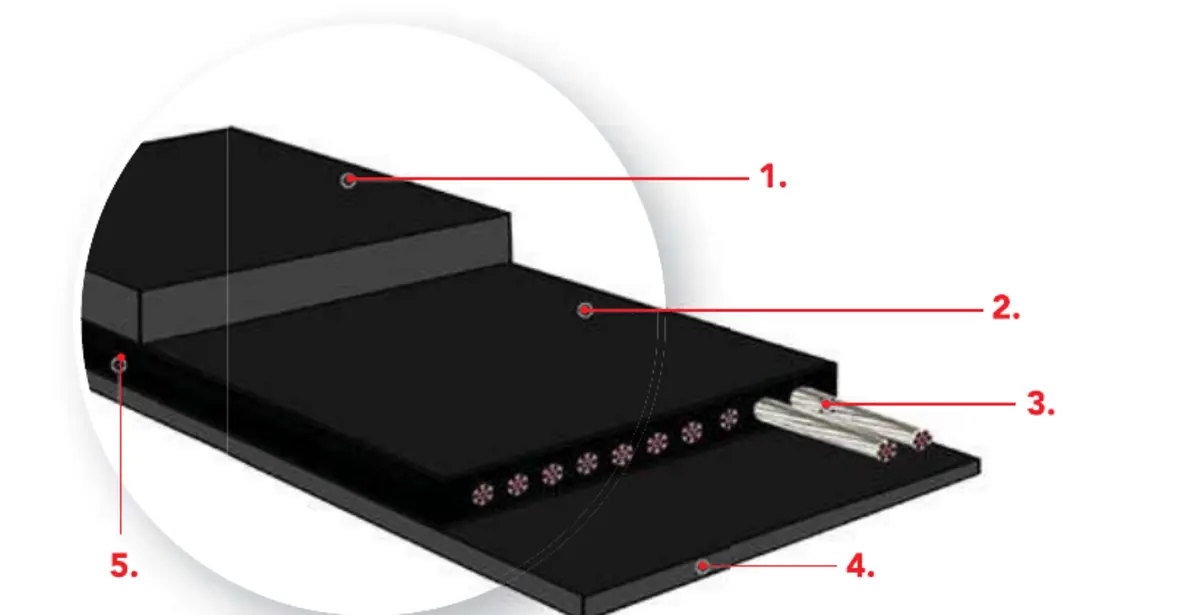
Steel cord belting
Low-elongation steel-cord constructions for overland, high-lift and high-capacity conveying, with cord, splice and protection systems selected around the duty.
- Up to ST10000
- Up to 3,000 mm
Versatile plant & mine duties
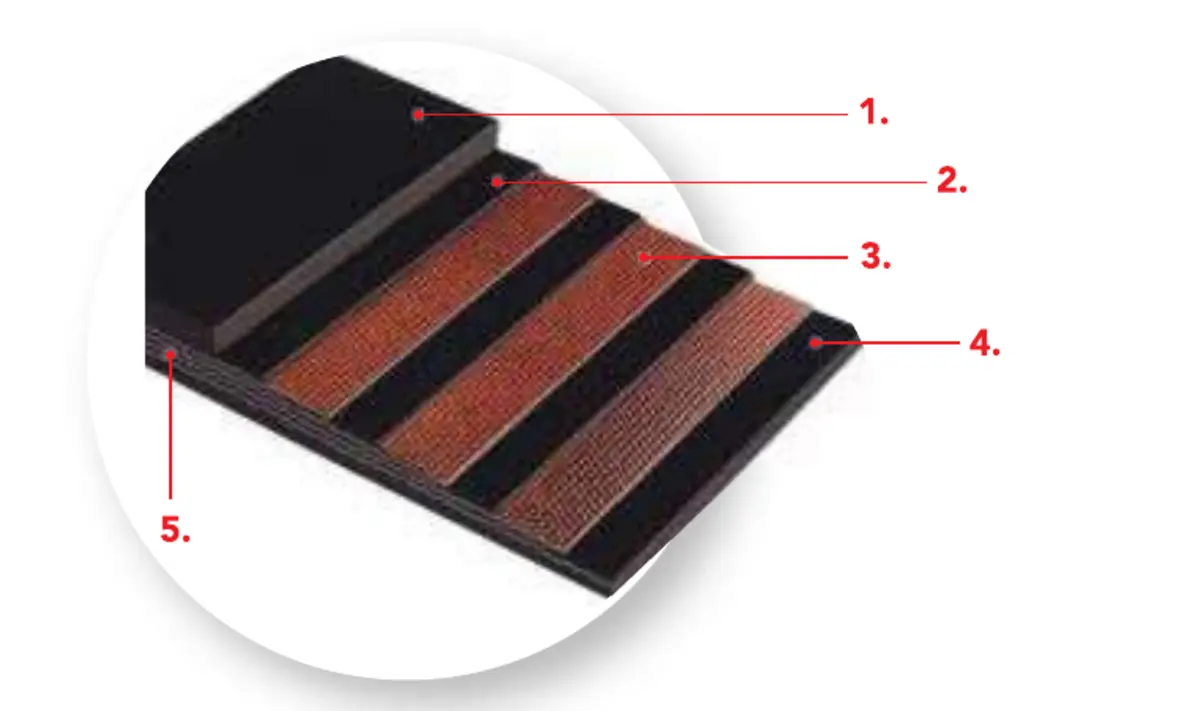
Multi-ply fabric belting
EP/PN, NN, PP and special-weave carcasses for general through severe service, with ply count, flexibility and protection configured to the conveyor.
- EP/PN, NN & PP
- Cut or moulded edge
Lightweight & high strength
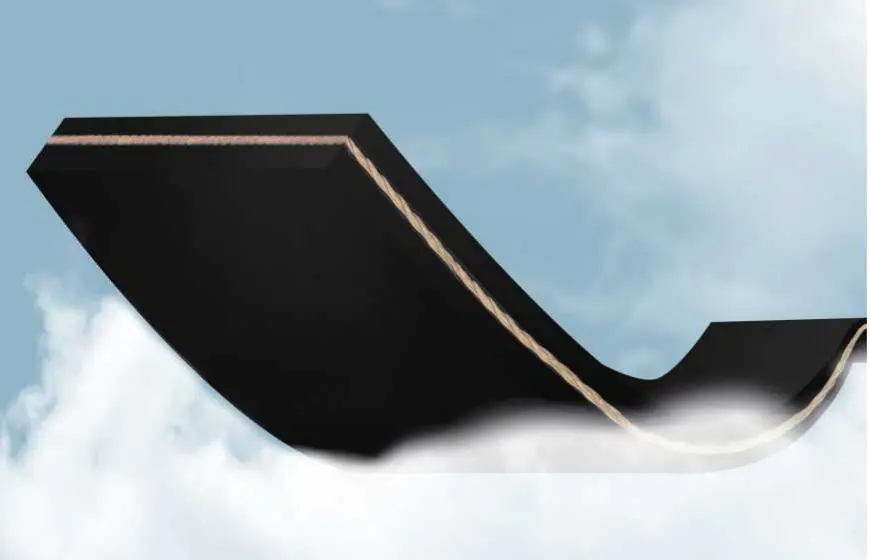
Aramid DPP belting
DPP800 to DPP4000 aramid constructions combine low published elongation with reduced moving mass for long-distance, high-tension and power-sensitive systems.
- DPP800–DPP4000
- 0.5% at 10% load
01 / Belt construction
Choose the carcass
Compare steel cord, multi-ply fabric, aramid, straight-warp, pipe, sidewall, solid-woven and reinforced designs.
- Strength and elongation
- Carcass material and ply arrangement
- Pulley and transition geometry
- Splice pathway
Choose the protection
Compare AS-N, AS-M and AS-A, K Grade FRAS, AS Grade S, and separate heat, cold, oil, chemical and low-rolling-resistance functions.
- AS and FRAS classification
- Dominant damage mechanism
- Operating environment
- Qualitative performance profile
Confirm the supply
Turn the selected construction and compound into a controlled belt package with the required protection, splice materials, testing and logistics.
- Cover thickness and edges
- Breakers and rip protection
- Splice kits and documentation
- Reels, packaging and delivery sequence
Solution architecture
Five layers of one supply decision.
Carcass
Tensile capacity, elongation, flexibility, pulley compatibility and splice pathway.
Cover
Protection from abrasion, cut and gouge, fire, temperature, oil, chemicals and dynamic losses.
Protection
Breakers, transverse reinforcement and detection options where impact or rip risk requires them.
Splice
Belt construction, splice geometry and compatible materials considered as one operating system.
Supply
Testing, identification, reel design, packaging, delivery sequence and local coordination.
Specialist product range
For duties outside standard flat conveyor belting.
Double Arrow literature also covers specialist constructions for feeder equipment, jointless applications, filtration, rip detection, ceramic wear surfaces and low-energy overland conveying. Suitability and manufacturing scope are confirmed from the equipment and operating data.
01
Feeder belting
Flat, flanged, V-guided and combined hot-moulded constructions for coal feeders and controlled metering duties.
Discuss this product ↗02Endless belting
Jointless carcass constructions for specialist equipment where a conventional splice is not suitable.
Discuss this product ↗03Vacuum filter belting
Perforated and drainage-channel constructions for horizontal vacuum filtration and dewatering equipment.
Discuss this product ↗04Intelligent rip protection
Embedded detection loops and reinforced constructions for selected rip-sensitive conveyor systems.
Discuss this product ↗05Ceramic-surface belting
Rubber-bonded ceramic inserts for short conveyors where concentrated sliding wear rapidly consumes conventional covers.
Discuss this product ↗06Low rolling resistance
LRR, fire-resistant LRR and Super LRR pulley-side compounds supported by dynamic characterisation and conveyor modelling.
Discuss this product ↗Application first
The same nominal belt rating can serve very different duties.
Material, impact energy, conveyor geometry, speed, operating temperature, fire risk, maintenance strategy and delivery constraints all change the correct product configuration.
Explore by application ↗Need help specifying a belt?