 AUSTRALIA · CONVEYOR BELTING
Cover compounds
Energy-Efficient Low Rolling Resistance Covers
Pulley-side compounds characterised for lower indentation losses on long, high-capacity and energy-sensitive conveyors.
Product overview
Built around the duty.
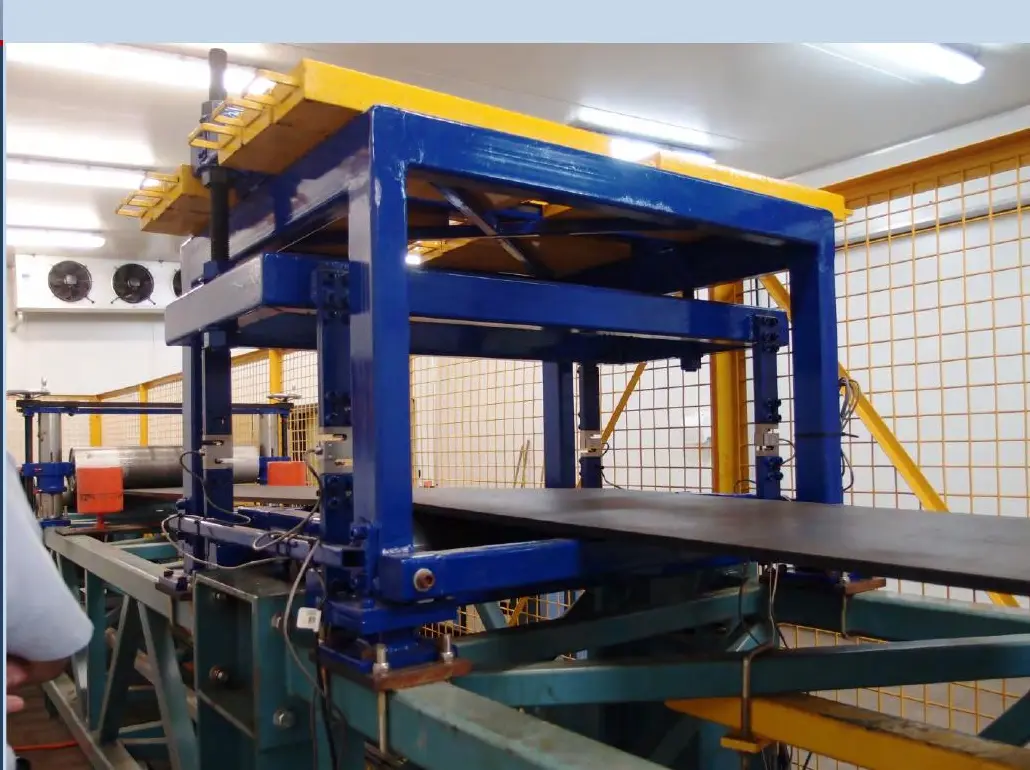
As a belt passes over each idler, the pulley-side cover deforms and recovers. A low rolling resistance (LRR) compound is formulated to reduce the energy lost through this repeated indentation. Its value is established through rubber characterisation, full-scale indentation testing, conveyor calculation and—where required—field power measurement.
Construction & selection
What defines this product.
- Pulley-side compound tuned for dynamic hysteresis behaviour
- DMA characterisation across temperature and frequency
- Full-scale indentation rolling resistance verification
- Conveyor-specific power and energy modelling
- Field DAQ pathway for drive torque and power verification
Typical applications
Where it fits.
- 01Long overland conveyors
- 02High-capacity mine-to-port systems
- 03Energy-optimisation and drive studies
- 04New conveyor design and major upgrades
Validation pathway
From rubber behaviour to operating power.
LRR selection is stronger when laboratory characterisation, conveyor modelling and site measurement tell the same story. The supplied technical presentation documents each stage of that pathway.
Dynamic mechanical analysis
Viscoelastic properties are characterised across a published test window of −50°C to +40°C, up to 16 Hz and up to 7% strain for calculation inputs.
Indentation rolling resistance
Full-scale IRR testing is used to check the relationship between DMA characterisation and belt behaviour over an idler.
Conveyor calculation
Compound data is combined with load, speed, temperature, idler and route inputs to estimate drive power and energy demand.
Field DAQ verification
Drive-shaft strain gauges and related instrumentation can measure real-time torque and power on an operating conveyor.
Engineering inputs
What changes the energy result.
An LRR compound is not selected from belt length alone. These system inputs determine the useful operating window and the value that can be supported in a project study.
| Input | Why it matters | Information to provide |
|---|---|---|
| Temperature | Rubber viscoelastic behaviour changes with temperature | Normal, minimum, maximum and seasonal belt temperature |
| Load and capacity | Idler indentation changes with belt loading | Tonnage, bulk density, loading profile and operating cases |
| Speed and idlers | Deformation frequency and contact geometry affect loss | Belt speed, idler diameter, spacing and trough arrangement |
| Belt construction | Mass, thickness and stiffness affect the conveyor model | Width, carcass, rating, covers and proposed belt mass |
| Route and drives | Lift, curves and drive layout change total power demand | Profile, centre distance, lift, curves, take-up and drive arrangement |
| Carrying-cover duty | Energy efficiency cannot compromise wear or safety | Material, abrasion, impact, fire and temperature requirements |
The published DMA window describes a characterisation method; it is not the operating-temperature range of every finished belt. Product limits and project test conditions must be confirmed separately.
Published track record
Applied to long overland and pipe conveyors.
The supplied 2016 Double Arrow and Conveyor Dynamics presentation records LRR or Super LRR applications on four conveyor systems in Australia, South Africa and China.
Recorded conveyor lengths
The published list includes long overland and pipe-conveyor applications.
Published reference projects
Two in Australia, one in South Africa and one in China.
Historical power report
The presentation reports this reduction for its listed systems; it is not a universal or guaranteed saving.
Historical project performance depends on its design baseline, loading, temperature, operating state and measurement method. A new project should use agreed compound data and a defined conveyor model before savings are stated.
Specification note
LRR is primarily a pulley-side cover function. Final selection must preserve the required carrying-cover wear, impact, fire and temperature performance. No project energy saving should be guaranteed without an agreed conveyor model and test basis.
Need help specifying a belt?